
Movable walls - one space, many hall layouts
Movable walls are probably the most underrated conference technology - yet they are exactly what decides how flexible a hall is. Thanks to them, one space can be three separate rooms or a single great auditorium, depending on the need. We explain how movable walls work in practice, how they let you fit the hall to the event's agenda and why they translate into real savings in the conference budget.
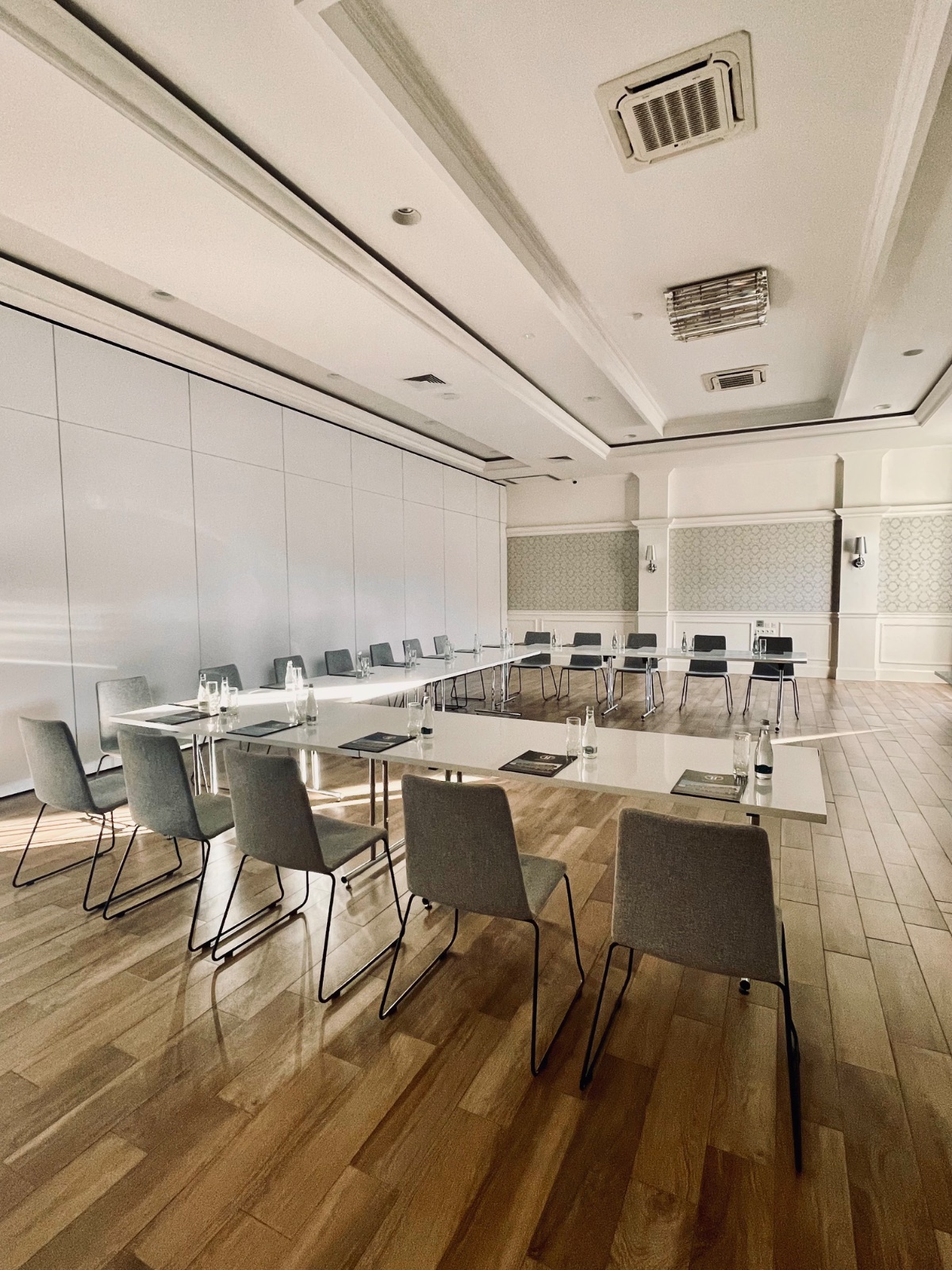
Divide and join the space for the agenda
The greatest advantage of movable walls is the ability to change the layout during an event. In the morning the whole group can attend a plenary session in one large hall, and after lunch the space divides into three smaller rooms for parallel workshops - with no change of building and no moving participants elsewhere. The walls are shifted between blocks, and the groups only change places. It is the ideal solution for multi-strand conferences with plenary and workshop sessions in one day.
Acoustics and the comfort of parallel sessions
The key question when dividing a hall is acoustics. Modern movable walls insulate sound well, so parallel sessions do not disturb one another - you cannot hear the speaker from the room next door. Each separated segment has its own lighting and access to air conditioning, so working conditions are comfortable whatever the layout. Good acoustic insulation is the condition for dividing the space to make sense; without it, parallel workshops turn into a loudness contest.
You pay for as much space as you need
Movable walls also have an economic dimension. A smaller group need not rent the whole large space - we fit the hall configuration to the real number of participants, and that shows in the quote. An intimate training gets a cosy segment, a large conference the whole auditorium. This way you do not pay for square metres you will not use, while being sure the space can be enlarged if needed. Price flexibility goes hand in hand here with flexibility of arrangement.
Flexibility within a single day
The real strength of movable walls is the speed at which the layout changes. Transforming the space between blocks takes a short break, so the agenda can flow smoothly from format to format. A plenary session, workshops in subgroups, and in the evening a banquet in the joined hall - all in the same place, on the same day. This flexibility lets you design richer, more dynamic events, with no compromises forced by a rigid division of rooms.
What events this solution suits
Movable walls work for events with a changing format: conferences with plenary and workshop sessions, trainings with subgroup work, industry congresses and events combining a content part with a gala. They also help when it is hard to predict the exact number of participants in advance. Everywhere a single rigid hall would be either too small or too large, a flexible space adapts to the real needs of the event and its successive stages.
Let's plan the layout for your format
The best way to use the potential of movable walls is to plan the layout for a specific agenda in advance. Tell us about the event's format - the number of participants, the sessions, the transitions between blocks - and we will show how we will set the space for it and how it will change over the day. A well-designed hall configuration is one of those elements participants do not notice when it works perfectly - and which genuinely decides the smoothness of the whole event.
Tell us about your event's format - we will show how we will set up the movable walls for it and fit the space to the number of participants.
Offer for business